The Thermometer
Why Stoics chase things they called worthless

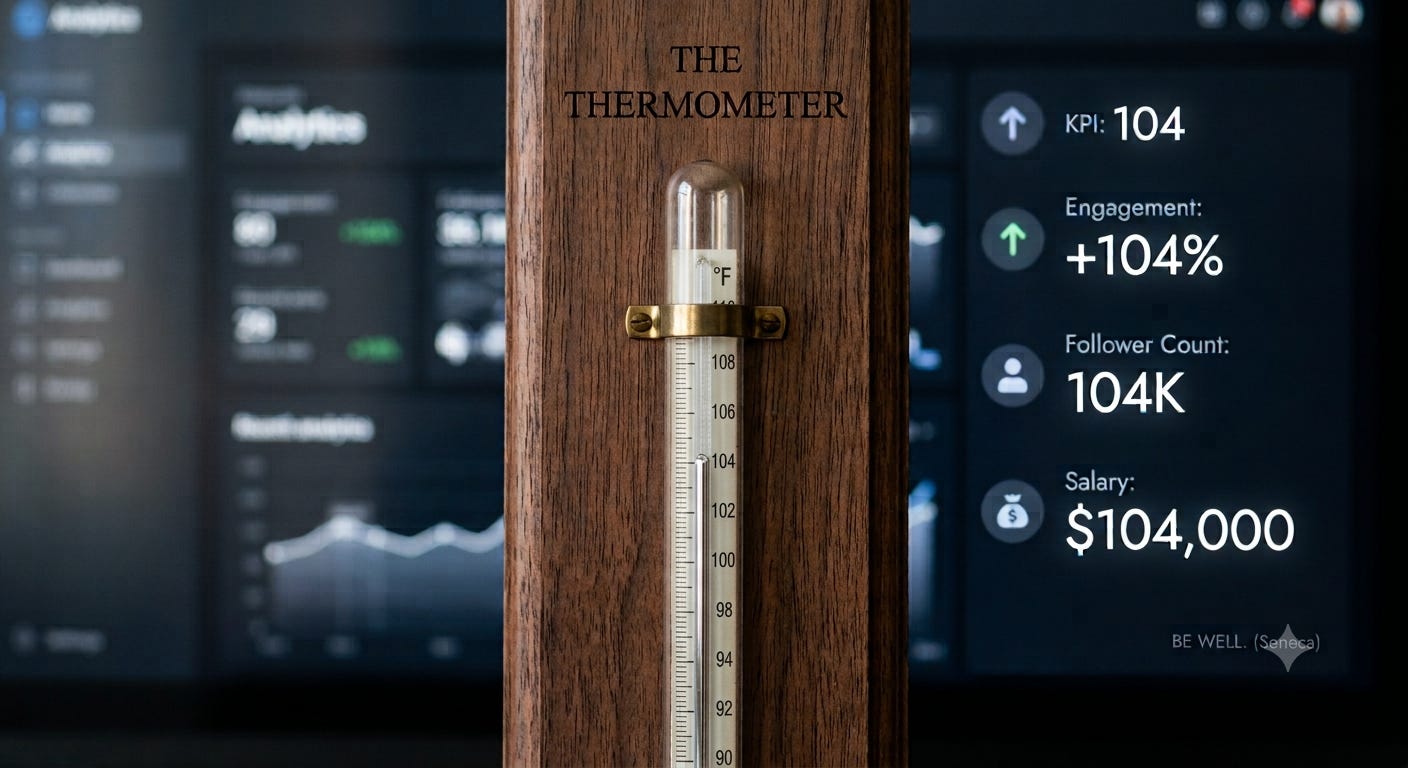
A parent takes a child’s temperature. The mercury reads 104. She drives to the hospital.
Ask her later why she went and she will point to the number. But she does not care about mercury. Nobody frames a thermometer reading. The number told her what to do. The child is what mattered.
The Stoics said health, money, and reputation are indifferent. This is the claim that gets them in trouble. Critics have been asking the same question for two thousand years: if these things are indifferent, why do you pursue them? Why does the Stoic take the promotion, save for retirement, go to the gym?
The answer is the thermometer.
Health is not a prize. It is a reading. In most circumstances, nature equips us to seek it, the way it equips us to feed our children and keep our word. Its presence on the list of things normally worth pursuing is information about what a reasonable person does next. Information, not reward.
This changes the question you ask. The old question is how much can I get. The new question is what does this tell me about the right action here.
Consider your compensation. On the scoreboard view, the number is the point. You won or you lost. On the instrument view, the number is data. It tells you something about your market, your leverage, your next conversation. You read it, you act well, you move on. The number was never the point. The acting well was.
Same with the title. Same with the follower count. Same with the diagnosis, for that matter. Chrysippus said that if he knew fate had illness in store for him, he would move toward it. He did not mean he wanted to be sick. He meant that even the reading he did not prefer was still a reading, still information about the right next action.
Your dashboard is full of gauges. Salary, headcount, engagement, blood pressure. None of them is the destination. All of them are instruments. The map is not the territory. The scoreboard is not your virtue.
Check the thermometer. Act appropriately. Move on. Your virtue is not at stake.
Be well.
NB: The fragment behind this piece survives because Epictetus quoted his predecessor. Chrysippus, in my rendering of Discourses 2.6.9:
So long as what comes next is unclear to me, I hold to whatever is better suited for obtaining the things that accord with nature. God himself made me the kind of creature that selects them. But if I knew that illness was ordained for me now, I would move toward it. Even my foot, if it had a mind, would volunteer to step into the mud.